

REAL TALK with SAMI ROBERTSON
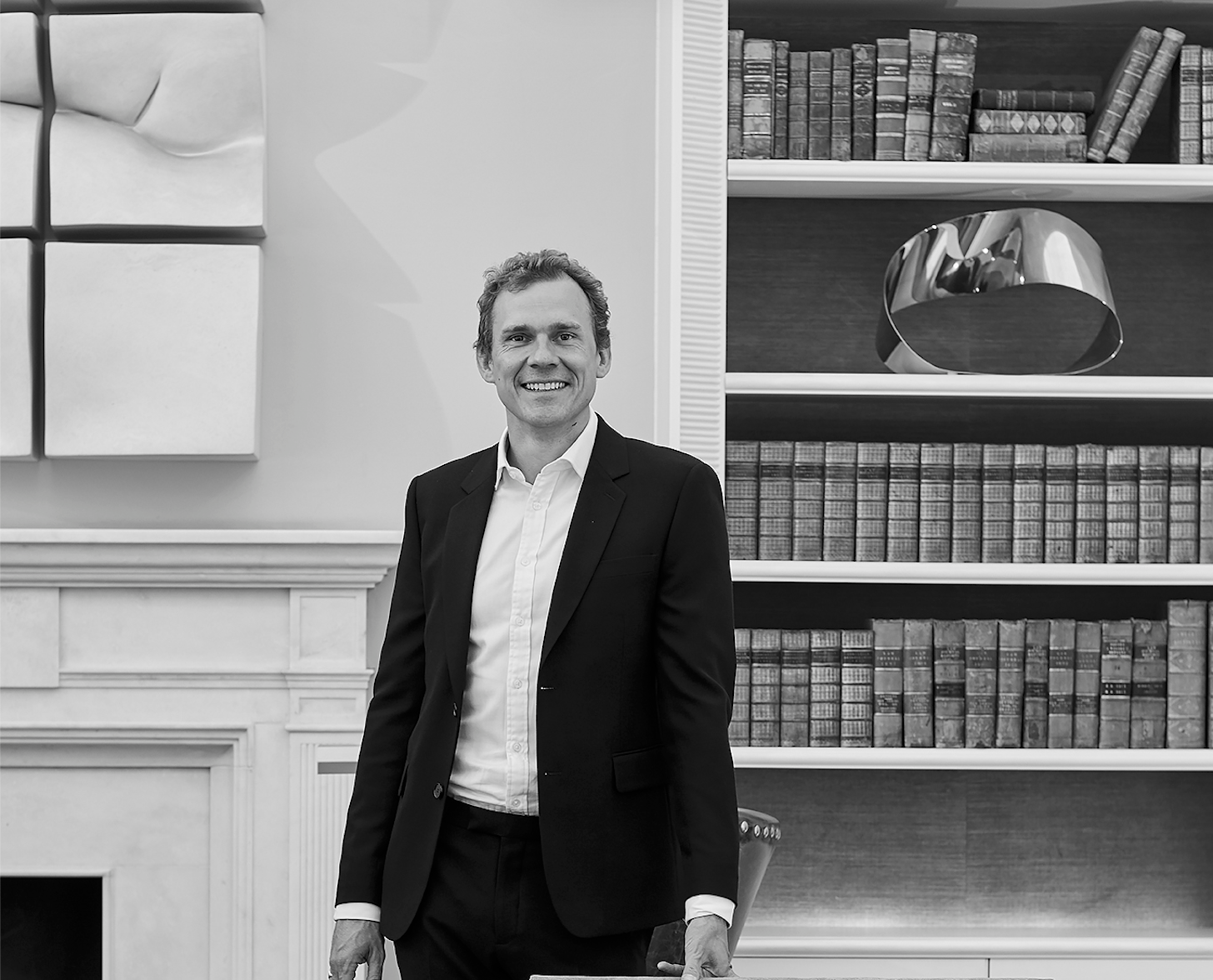
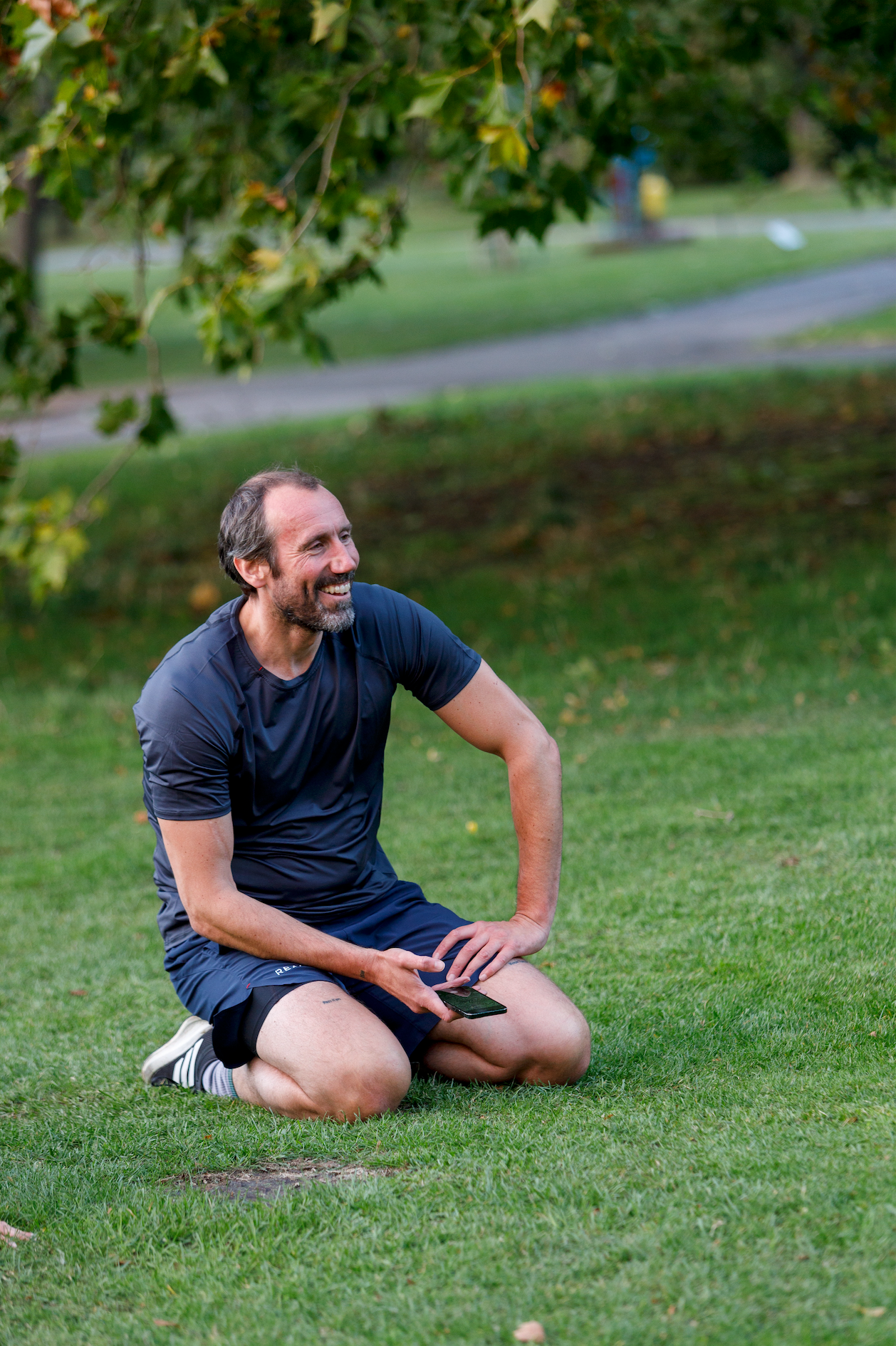
Sami Robertson is a business owner, a father of four and knows a lot about swimming. After nearly two decades of working for Knight Frank and running their agency office in Kensington, Sami started his own property business called Harwood Advisory in 2020, which finds and sells residential properties across England.
Since then he's also founded Wildpool, a company that make shoes built by swimmers for swimmers. Having spent years in and out of oceans and seas, Sami has designed Wildpool shoes for the global swimming community. These shoes give any utility or seaside footwear a run for their money.
Based in West London, I caught up with him this week.

MF: Tell me about your day to day?
SR: It starts very early, around 5:30, allowing me time to settle my mind on what needs to get done in the day ahead. I try to avoid my phone, do some reading and have recently been journaling. I have four children and they need to be at their bus stop for school, by 7:15 am. After that I am free to exercise, mostly swimming, in the Serpentine or at David Lloyd in Acton. I love my swimming community and there aren't many spots in South-West England where I haven't swum.
I currently run two businesses; one is a property business called Harwood Advisory I started during Covid after 18 years with Knight Frank and the other is my passion project called Wildpool, a swimming shoe - made for swimmers by swimmers. I have a small team with me at Harwood, we help clients find properties in London and the countryside, mainly Southern England.

MF: What would you like to do more of?
SR: If I had more time and money, I would buy a house by the sea and swim every day, whatever the weather. I want to be in the sea, it's my happy place.
MF: What got you into swimming?
SR: I was quite young, aged 29 when I needed a knee operation. I was training for an Ironman at the time and ran a lot around London. After the op I needed six months to recover and in that time a friend of mine suggested a 10k swim to raise funds for Nordoff Robbins. I was feeling pretty sedentary at the time and needed this to get me going. After the swim my friend Tommy joked "why not now swim the Channel" and I thought - Yes!
So I did that and felt sick of swimming. The whole process was stressful, paricularly the weight management and by that I mean you need to have some insulation for your organs - haha. But then I'd have a lay over of say six months before I'd jump back into another challenge. These days I've found that little and often works much better for me, so I maintain a baseline of fitness and preparation for the next challenge. I've just done the Cook strait, which was nearly 30 km and there is always another challenege!

MF: Take me back to the Cook Strait swim - what is going on in your head as you get into the water to begin?
SR: When I arrived in New Zealand after an inter-galactic journey through Dubai I was informed that the weather had blown our window. We needed a neap tide and this looked like at least another two weeks away. Two weeks in limbo, working in a time-zone eleven hours ahead, leaving my four kids behind during their Easter holidays was not what I had planned - it was stressful. When the call finally came to say "we're swimming tomorrow", I was so happy, I even cried. I'd been wondering if I would go home after three weeks on the other side of the world, after all the sacrifices I'd made and not having the chance to swim.
So to answer your question, I was feeling so amped and ready to go. As you might imagine, headspace during these endurance events is key - everything can change fast. I knew this swim would take me at least nine hours and after just 90 minutes the water started getting quite bumpy. It was then that calm and positivity were required. When you face challenges, particularly early on it can shift your mindset and if you're not careful you can spiral somewhere very negative in no time.
Some recent reading that I took with me to New Zealand really helped. One of these books is called "Breath" by James Nestor and the other "Manifest" by Roxie Nafousi. When the water started chopping up after just 90 minutes my mindset tipped in the balance and the coaching from the books kept me in a positive frame of mind. In endurance swimming, you can train and train and train, but fitness is only 50% of what's required. Your mental management is the other 50% while you're submerged in the water, over hours and hours.

MF: What's next for you?
SR: I’m currently organising a swim around the Isle of Wight, which is a different level of planning entirely. All the other swims I’ve done involve paying a fee to an organisation that handles everything for you. With this swim, there’s no organisation - you have to do all the planning yourself.
The swim itself requires two boats, a support team, navigators, pilots, and kayakers. It’s a lot. On top of that, it’s roughly 71 miles and tidal-driven. If you miss the tide, you get knocked back six hours. The record is 15 hours, but we’re not chasing a record - we just want to get round in one piece.
This swim has an even bigger meaning for me. I scattered my parents’ ashes at sea off the Jetty of a great friend, John Caulcutt CBE,who’s currently living with Parkinson’s. John - believe it or not - is going to be our pilot, because he knows these waters better than anyone. Without him, the swim wouldn’t be possible. We’re going to start at the end of his Jetty in Yarmouth, where I scattered Mum and Dad’s ashes, and hopefully finish at the same spot.
It’s a huge undertaking, and we’re raising money and awareness for Cure Parkinson’s.
This swim has an even bigger meaning for me. I scattered my parents’ ashes at sea off the Jetty of a great friend, John Caulcutt CBE,who’s currently living with Parkinson’s. John - believe it or not - is going to be our pilot, because he knows these waters better than anyone. Without him, the swim wouldn’t be possible. We’re going to start at the end of his Jetty in Yarmouth, where I scattered Mum and Dad’s ashes, and hopefully finish at the same spot.
It’s a huge undertaking, and we’re raising money and awareness for Cure Parkinson’s.

MF: How important is exercise for your physical and mental wellbeing?
SR: I've realised how important it is to keep my training consistent and add variety to my routine, like gym work, mobility etc. As I said earlier, I used to finish a challenge and then go straight back to putting all my efforts into my job, my two companies, my kids and neglect my fitness entirely. I've realised that to keep myself in-shape and mentally sharp, I need to maintain regular movement and exercise. Swimming is my meditation and the community I am part of is everything for me. I couldn't be happier than when I'm in the water.
MF: How do you deal with hard things?
SR: Ha, they happen every day. I've lost both parents and meaningful others in the past few years and to be honest I am always reminded by how incredible my four kids are. This sense of appreciation keeps me very stable. I live in my own place, I have wonderful friends and this is my foundation for when life gets choppy.
MF: What's your favourite time of year?
SR: I love the seasons. I love the changes. But I'm pretty bad in the bleak, dark and dead months of winter. No one's around and no one seems to be having fun.
MF: Is there anything you couldn't live without?
SR:Ummm, my family and my kids are by far and a way the most important thing to me. If there was one thing I could get rid of it would be my phone - I would throw it into the sea!



Leave a comment
This site is protected by hCaptcha and the hCaptcha Privacy Policy and Terms of Service apply.